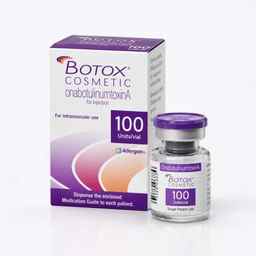
Botox Cosmetic
Allergan Aesthetics, an AbbVie company
glabella, forehead, lateral canthal lines, platysma bands
Last verified 7/30/2026
These treatments work differently and are not direct substitutes.
Allergan Aesthetics, an AbbVie company
glabella, forehead, lateral canthal lines, platysma bands
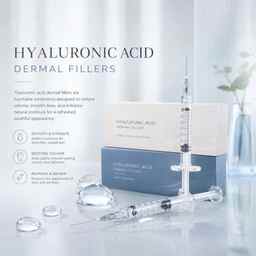
Injectable
lips, perioral lines, cheeks, chin, jawline, nasolabial folds, temples, infraorbital hollow, dorsal hands
| Attribute | Botox Cosmetic | Hyaluronic acid dermal fillers |
|---|---|---|
| Treatment category | Injectable | Injectable |
| What it targets | Movement-driven lines and the pull of specifically injected muscles. | Volume, contour, projection, and selected folds or hollows when an appropriately indicated product is placed in the intended tissue plane. |
| How it works | Binds to motor nerve terminals and inhibits acetylcholine release by cleaving SNAP-25, producing temporary chemodenervation of injected muscles. | An implanted hyaluronic acid gel occupies space in soft tissue; formulation, cross-linking, concentration, particle properties, and injection plane differ by product. |
| Common treatment areas | glabella, forehead, lateral canthal lines, platysma bands | lips, perioral lines, cheeks, chin, jawline, nasolabial folds, temples, infraorbital hollow, dorsal hands |
| Whether it adds volume | No | Yes |
| Results timing | An effect can begin within 1 to 2 days and commonly strengthens during the first week. | Volume change is visible immediately, with assessment refined after early swelling settles. |
| Typical longevity | The FDA label describes approximately 3 to 4 months for glabellar-line effect; individual areas and patients vary. | Product- and area-specific. FDA consumer guidance gives roughly 6 to 12 months for many absorbable HA fillers, while some approved products have longer study follow-up. |
| Reversibility | Not immediately reversible; the effect usually diminishes as neuromuscular function recovers. | Many HA fillers can often be reduced with clinician-administered hyaluronidase, but this use is off-label in the US, response varies, and complete reversal is not guaranteed. |
| Downtime | No required recovery period is specified in the label, although injection-site effects can occur. | Usually limited social downtime, but swelling, tenderness, redness, and bruising can be conspicuous for days and sometimes longer. |
| Pricing basis | Usually priced per Botox Cosmetic unit or, less transparently, by treatment area; Botox units must not be converted to Dysport units. | Usually priced per syringe or mL; price comparisons must retain product, syringe volume, area, and whether multiple syringes are expected. |
| Major risks | Unwanted weakness such as eyelid or brow ptosis, asymmetry, headache, hypersensitivity, and rare distant spread of toxin effect with swallowing or breathing difficulty. Contraindicated with hypersensitivity to a botulinum toxin preparation or infection at the injection site. | Swelling, bruising, pain, tenderness, lumps, infection, inflammatory reactions, and rare inadvertent intravascular injection causing tissue necrosis, vision loss, or stroke. |
| Primary limitations | Static etched lines or volume loss can remain even when muscle movement is reduced. | The wrong product, amount, or placement can look overfilled, fail to address the actual cause, or require more than one syringe. |
Open a section for more context. Sources appear beside the claims they support.
| Attribute | Botox Cosmetic | Hyaluronic acid dermal fillers |
|---|---|---|
| How it works | Binds to motor nerve terminals and inhibits acetylcholine release by cleaving SNAP-25, producing temporary chemodenervation of injected muscles.
| An implanted hyaluronic acid gel occupies space in soft tissue; formulation, cross-linking, concentration, particle properties, and injection plane differ by product. |
| What it primarily changes | Movement-driven lines and the pull of specifically injected muscles.
| Volume, contour, projection, and selected folds or hollows when an appropriately indicated product is placed in the intended tissue plane. |
| What it does not change | It does not add tissue volume, replace structural support, fill a hollow, or resurface skin.
| It does not reduce muscle contraction like a neuromodulator and is not a skin-resurfacing treatment. |
| Adds volume | No
| Yes |
| Tightening effect | None; any contour change comes from altered muscle pull, not tissue tightening.
| No direct tissue-tightening action; contour support can create a lifted appearance in selected anatomy. |
| Whether they are true substitutes | Botox and Dysport share a treatment class but have different labels and non-interchangeable potency units. Botox and fillers are different approaches.
| HA fillers may be substitutes only when two specific products are intended for the same area and plane. They are a different approach from Botox. |
| Attribute | Botox Cosmetic | Hyaluronic acid dermal fillers |
|---|---|---|
| Typical number of sessions | One treatment visit; repeat treatment is considered after the effect wanes and should follow the product label.
| Often one visit with possible staged treatment or touch-up; amount and number of sessions depend on product, area, and goal. |
| Downtime | No required recovery period is specified in the label, although injection-site effects can occur.
| Usually limited social downtime, but swelling, tenderness, redness, and bruising can be conspicuous for days and sometimes longer.
|
| Swelling | Localized swelling is possible.
| Common and product/area dependent; lips can swell substantially.
|
| Attribute | Botox Cosmetic | Hyaluronic acid dermal fillers |
|---|---|---|
| How long it lasts | The FDA label describes approximately 3 to 4 months for glabellar-line effect; individual areas and patients vary.
| Product- and area-specific. FDA consumer guidance gives roughly 6 to 12 months for many absorbable HA fillers, while some approved products have longer study follow-up.
|
| Reversibility | Not immediately reversible; the effect usually diminishes as neuromuscular function recovers.
| Many HA fillers can often be reduced with clinician-administered hyaluronidase, but this use is off-label in the US, response varies, and complete reversal is not guaranteed.
|
| Attribute | Botox Cosmetic | Hyaluronic acid dermal fillers |
|---|---|---|
| Documented risks | Unwanted weakness such as eyelid or brow ptosis, asymmetry, headache, hypersensitivity, and rare distant spread of toxin effect with swallowing or breathing difficulty. Contraindicated with hypersensitivity to a botulinum toxin preparation or infection at the injection site.
| Swelling, bruising, pain, tenderness, lumps, infection, inflammatory reactions, and rare inadvertent intravascular injection causing tissue necrosis, vision loss, or stroke.
|
| Most likely disappointment | Static etched lines or volume loss can remain even when muscle movement is reduced.
| The wrong product, amount, or placement can look overfilled, fail to address the actual cause, or require more than one syringe. |
| When this treatment may not be appropriate | Do not use with product hypersensitivity or infection at the proposed injection site; additional warnings and patient-specific exclusions require prescriber review.
| Avoid when product contraindications apply, at infected or inflamed sites, or when the goal requires muscle relaxation, skin resurfacing, or surgery rather than volume.
|
| Provider-dependent variables | Muscle assessment, injection sites, dose, depth, symmetry planning, and management of adjacent-muscle spread.
| Diagnosis, product selection, injection plane, amount, cannula or needle choice, vascular safety technique, and complication readiness.
|
| Skin-tone considerations | Filler is not selected by skin tone alone, but bruising, inflammation, and post-inflammatory pigment change may present differently; product labelling and injector experience still matter.
|
| Attribute | Botox Cosmetic | Hyaluronic acid dermal fillers |
|---|---|---|
| United States regulatory status | FDA-approved prescription biologic for temporary improvement of moderate to severe glabellar lines, lateral canthal lines, forehead lines, and platysma bands in adults under the current US label.
| The FDA approves dermal fillers product by product and for specific indications; the HA-filler class itself is not a single approved product.
|
| Canadian regulatory status | Health Canada Drug Product Database lists Botox Cosmetic DIN 02531445 as approved; Canadian indications and dosing must follow the current Canadian product monograph.
| Health Canada licenses HA filler devices product by product through MDALL for Class III devices; class-level status does not establish a licence for every brand or indication. |
| Evidence status | High for product identity, mechanism, labelled indications, contraindications, and labelled duration; outcomes remain dose-, area-, and patient-dependent.
| High for class mechanism, product-specific regulatory model, common reactions, and vascular risk; duration and suitability must remain product- and area-specific.
|
Sources are grouped by treatment so the support for each record stays visible.
Enter a US ZIP code or Canadian postal code to check our stored estimate for the surrounding market.